Buyer FAQ — Water Rights, Access, Taxes & More
Straight answers to what buyers actually ask.
Buying rural mountain property involves questions that never come up in a suburb: water rights, well permits, winter access, septic, internet, wildlife, grazing. Here are honest answers to the ones we are asked most. If yours is not here, ask it directly — we will add it.
Questions Buyers Ask
Frequently Asked Questions
What is Hidden Valley Ranch?
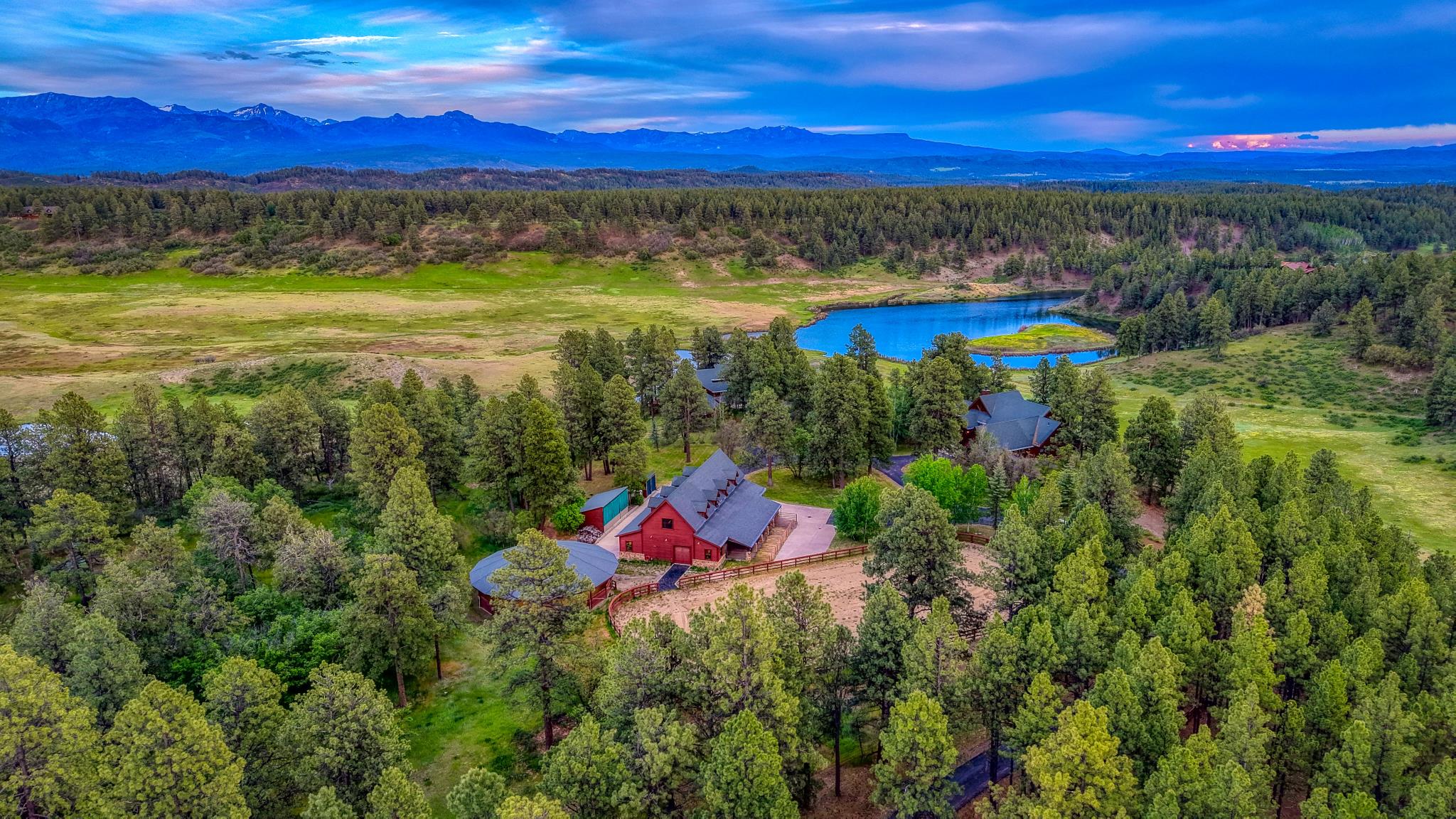
Hidden Valley Ranch is a gated community of roughly 1,630 acres about six miles north of Pagosa Springs, up County Road 400. It holds just 35 homesites of 35 to 55 acres each, with around 300 acres kept as common area. Owners share private, climate-controlled indoor pickleball courts, miles of private equestrian riding through wooded forest, meadow and lakeside, a lake gazebo with restroom facilities, shared boat docks with electricity, and a 55-acre lake reserved for owners and their guests. Utilities run underground and water comes from a central community system. County Road 400 is paved, county-maintained and plowed right to the gate.
Is the lake private, and who can use it?
Hidden Valley Lake is 55 acres and is private to the 35 owners within Hidden Valley Ranch and their guests. It is not open to the public and there is no public access point. It is stocked once a year with trout, bass and bluegill, and it was designed as wildlife and waterfowl habitat as much as for fishing. Owners cruise it in electric pontoon boats and fish it from electric fishing boats. There is a lake gazebo with restroom facilities and shared boat docks with electricity. This property has frontage on the lake, its own private dock that stays in year-round, and lake views from both main residences.
What fish are in the lake?
Trout, bass and bluegill. The lake is stocked once a year, which keeps the fishing plentiful across a longer season than a trout-only pond would manage. Owners fish it from electric fishing boats, or from the docks.
What are senior water rights, and why do they matter in Colorado?
Colorado allocates water by prior appropriation: first in time, first in right. Every water right has a priority date, and in a dry year the state curtails the most recent (junior) rights first so that the oldest (senior) rights are satisfied in full. A senior right therefore keeps delivering in exactly the years when water is scarce and most valuable. New rights are effectively unavailable on most drainages, so seniority on an established ditch is something that can be inherited through ownership but cannot be created later.
Who actually owns the water rights?
The Hidden Valley Ranch association does, not any individual parcel. The association holds 2.08 shares of the Four Mile Ditch Association, equal to 3.885 CFS, together with a 985 acre-foot storage right in the lake. Owners benefit through their membership in the association rather than by holding a right appurtenant to their own acreage. It is an important distinction, and one your water attorney will want stated plainly.
How senior are the Four Mile Ditch rights?
The Four Mile Ditch Association holds four adjudicated priorities: 1890 for 14.25 CFS, 1895 for 5.25 CFS, 1898 for 3 CFS and 1900 for 5.5 CFS. An 1890 priority is genuinely senior on this drainage. The water is diverted from Four Mile Creek roughly two miles inside the San Juan National Forest.
What happens to the water once it reaches the lake?
Hidden Valley Ranch holds a storage right of 985 acre-feet, adjudicated in 1994–95. Once water is stored in the lake it belongs to the ranch outright and does not have to be released downstream. Against that, projected domestic demand at full build-out is only about 23 acre-feet a year — so the ranch uses a small fraction of what it can store.
Where do I get the water documentation?
The Hidden Valley Ranch association holds all of the water right and legal paperwork; it is not held at the listing office. We will put you and your water attorney in contact with the association to obtain it during diligence.
How are the 12,161 square feet divided up?
Two main residences and a separate caretaker's apartment, all built in 2002. The main residence is 5,500 square feet of pegged-timber Craftsman construction with Venetian plaster and Australian hardwood floors throughout — three bedrooms and six bathrooms. The second residence is 5,200 square feet with four bedrooms and five bathrooms, and functions as a completely independent home. The caretaker's apartment is 1,500 square feet inside the equestrian barn: one bedroom, one bathroom and a kitchenette. Eight bedrooms, twelve bathrooms and eight garage bays in total.
What is in the barn?
Six thousand square feet, heated throughout: five indoor/outdoor stalls with automatic waterers, rubber mats and their own paddocks, two wash bays, a separate cedar-lined tack room with saddle racks and blanket bars, a feed room, a bathroom and laundry facilities. Then a full workshop laid out by a highway construction engineer, and a caretaker's apartment. Then, unusually, a 25 by 15 foot theater room, a pool table and a shuffleboard table. Outside there is an Olympic-sized riding arena that has been used for Parelli horse training clinics, two turnout areas, and a covered, lit round pen.
Can you ride from the property?
Yes. Hidden Valley Ranch keeps roughly 300 acres of common area with miles of private equestrian riding through wooded forest, meadow and lakeside, so you can ride from the barn without loading a trailer. For bigger country, San Juan National Forest trailheads are a short haul north up Fourmile Road.
What is winter access like?
County Road 400 — Fourmile Road — is paved, county-maintained and plowed from town all the way to the gate, so the drive in is a normal winter drive rather than an expedition. Snow plowing is provided on the Hidden Valley Ranch roads, and is also available inside each ranch for a very reasonable fee. You want clearance and four driven wheels from November to April, as you would anywhere at this elevation.
How far is it from town, and from an airport?
Downtown Pagosa Springs and the hot springs are about twenty minutes. Stevens Field is about the same — an 8,100 foot runway with a full-service FBO that handles mid-size to super-mid-size business jets, so private aircraft can be on the ground and at the gate inside half an hour. Commercial service is at Durango–La Plata County Airport, roughly an hour and forty minutes away, with direct flights to Denver, Dallas, Phoenix and Houston.
Can you show the property to an out-of-state buyer?
Yes. We regularly walk buyers through the entire compound on a live video call before they book a flight, and we can send the full package — drone footage, floor plans, survey and utility records — in advance, and connect you with the association for its documents and the water records. When you are ready to visit, we will help with flights into Durango or Albuquerque, or with an FBO slot at Stevens Field, and with lodging in Pagosa Springs.
Has this property been on the market before?
No. It was built in 2002 as a multi-generational family compound and has been held by one family since. This is its first offering on the open market.
What is included in the sale?
The land, the three buildings and their fixtures, along with the water hydrant and the generator. The shop tools, ranch implements and the furniture are all here and are available, but they are not included at the asking price — those are negotiated separately once a buyer is in contract.
What are the annual property taxes and association dues?
Property taxes are approximately $17,800 a year and the Hidden Valley Ranch association assessment is $11,300 a year. The property carries agricultural zoning.
How do I make an offer?
Contact the listing agent directly through the form on this site or by phone. We will send the full disclosure package and the survey, connect you with the association for its documents and the water records, and walk you through the Colorado contract timeline.
Still Deciding What to Read Next?
- Senior water rights — the part of this property that cannot be replicated.
- Private lake and dock — access, the dock and what is stocked.
- Equestrian facilities — the barn, the covered round pen, turnout and hay.
- Hidden Valley Ranch — the gated community, the lake and what owners share.
- Pagosa Springs area guide — what living here is actually like.
Questions about this part of the property? Ask, and you will get a straight answer.